
Last updated October 17, 2026
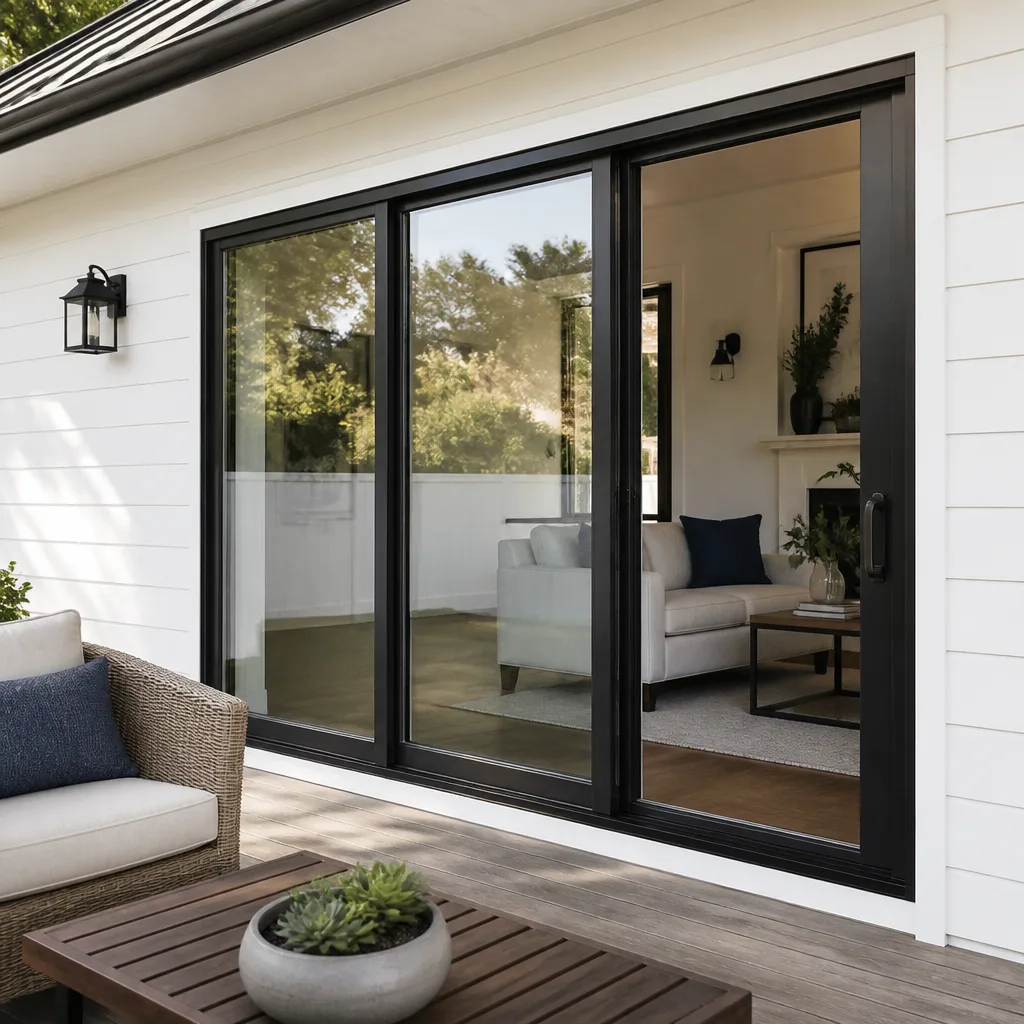 Sliding glass doors
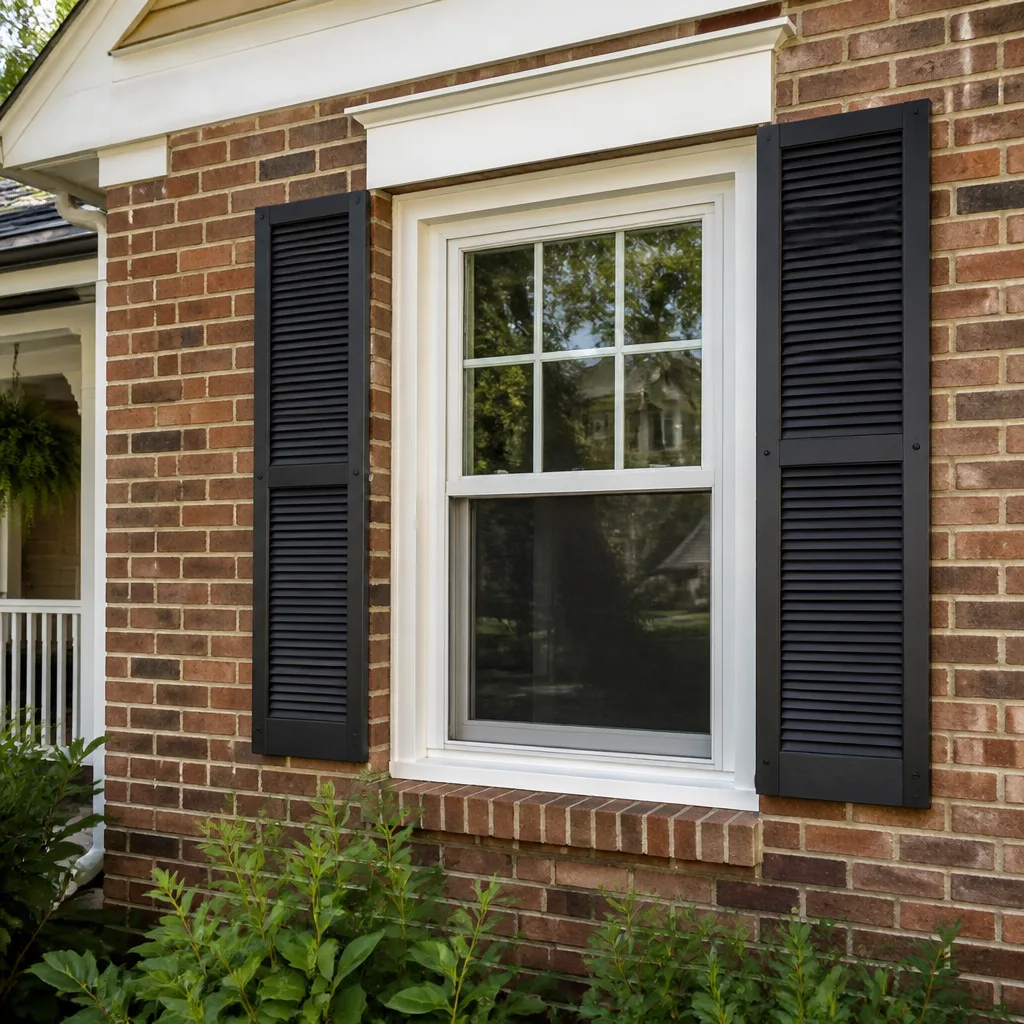 Single hung
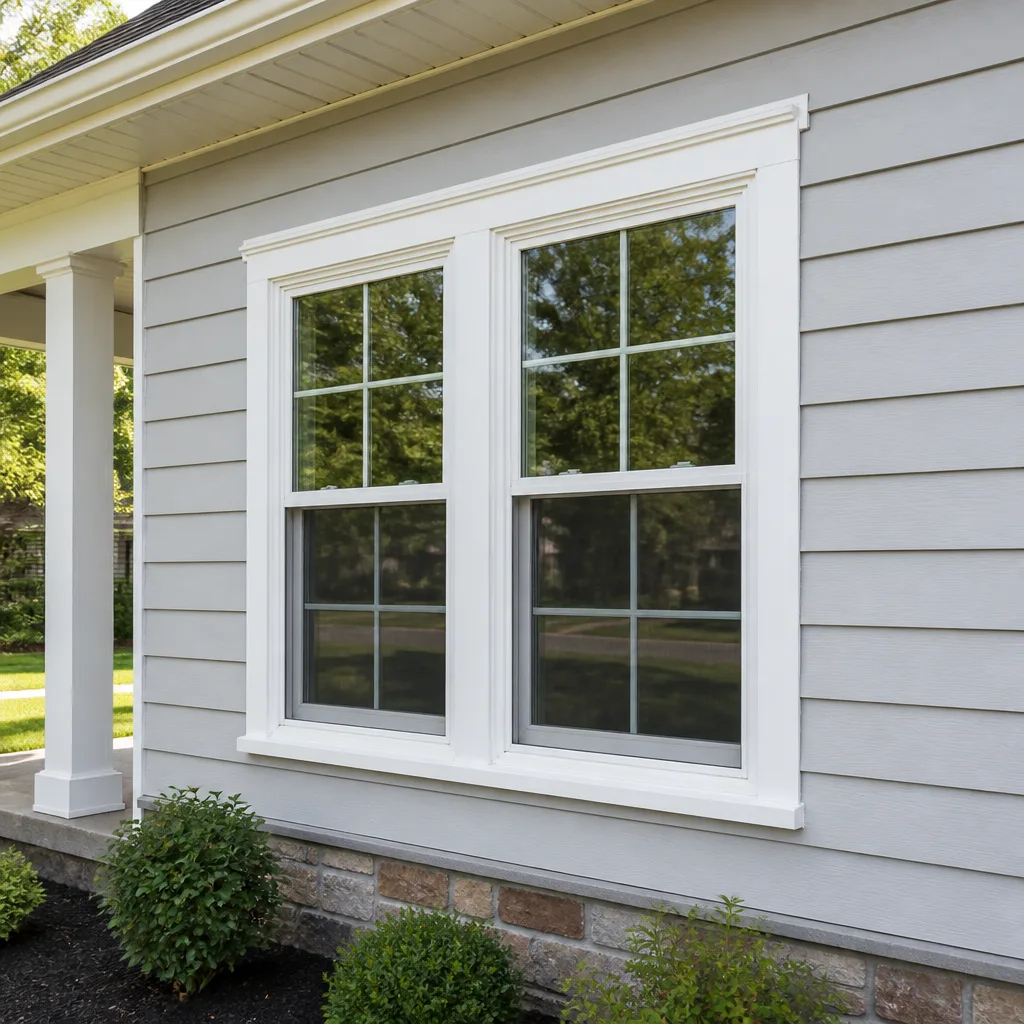 Double hung
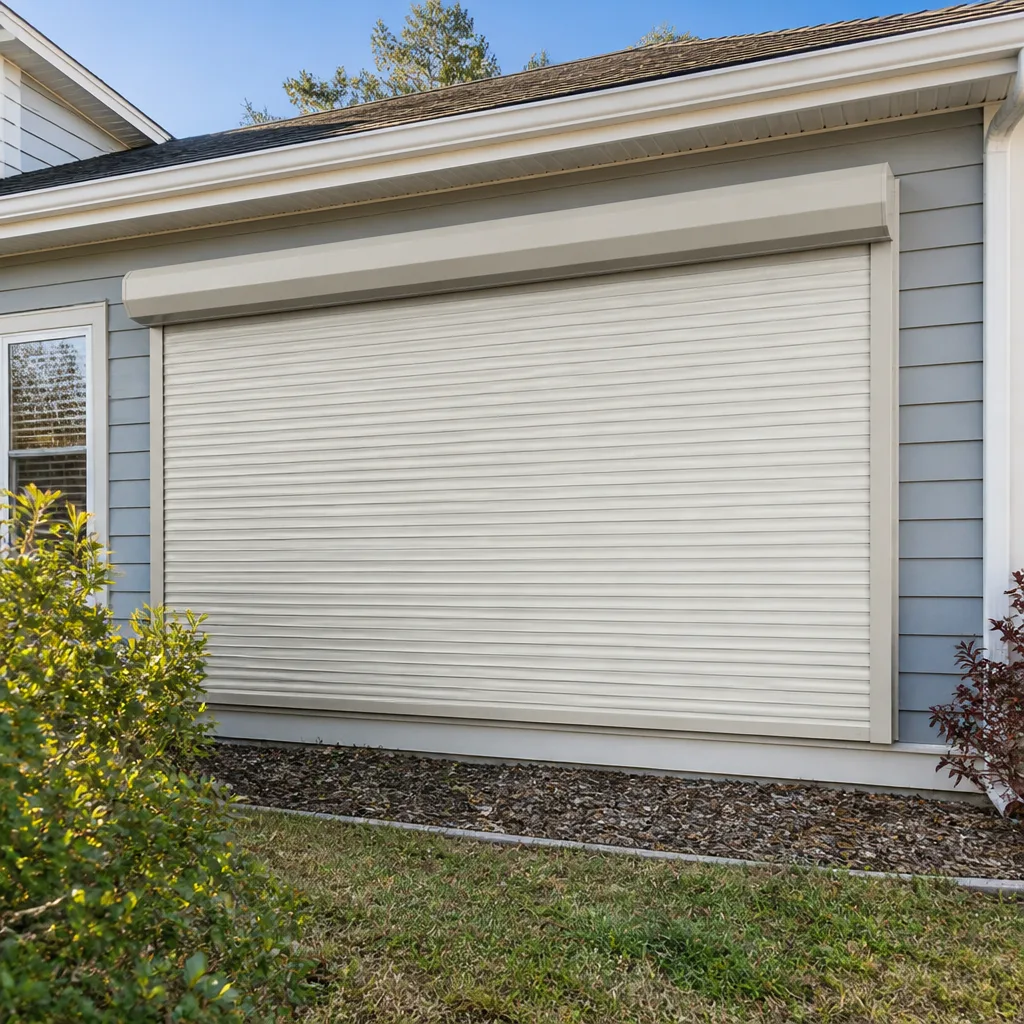 Horizontal roller
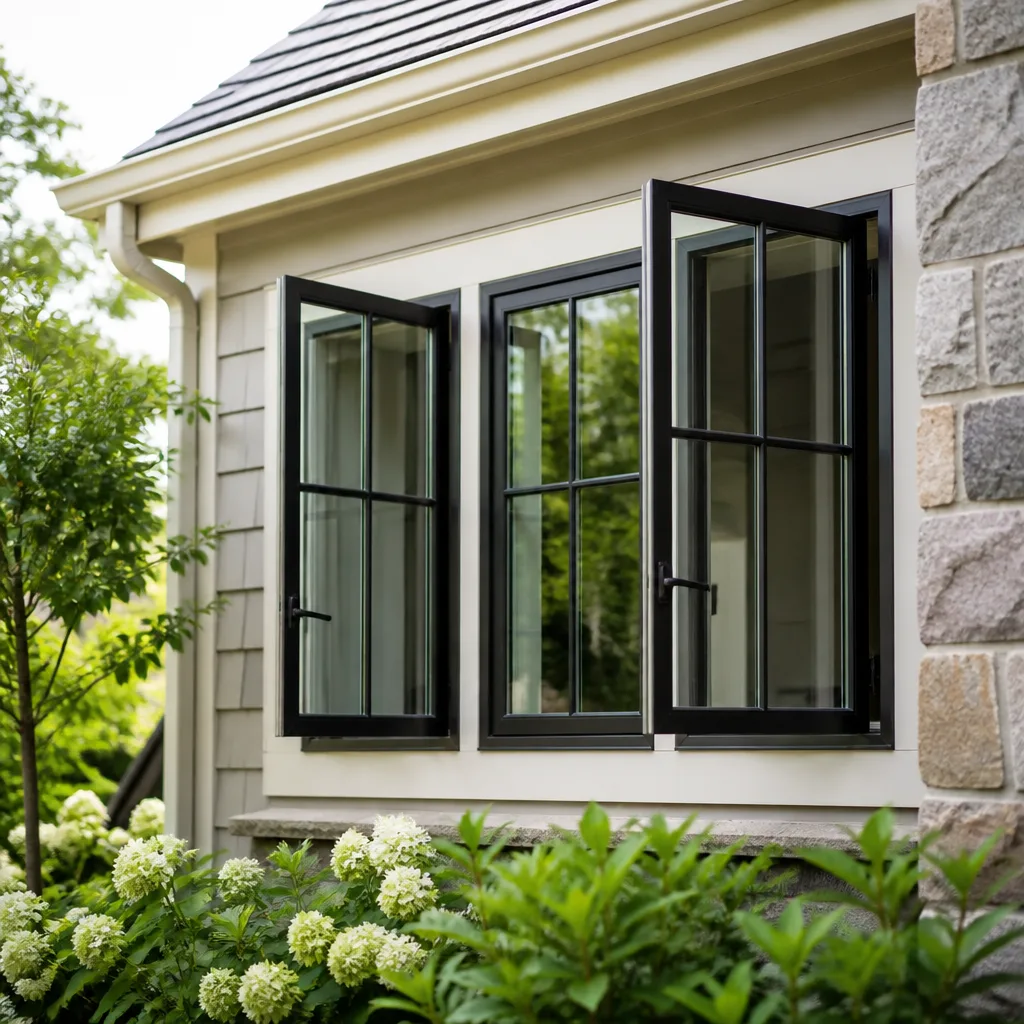 Casement
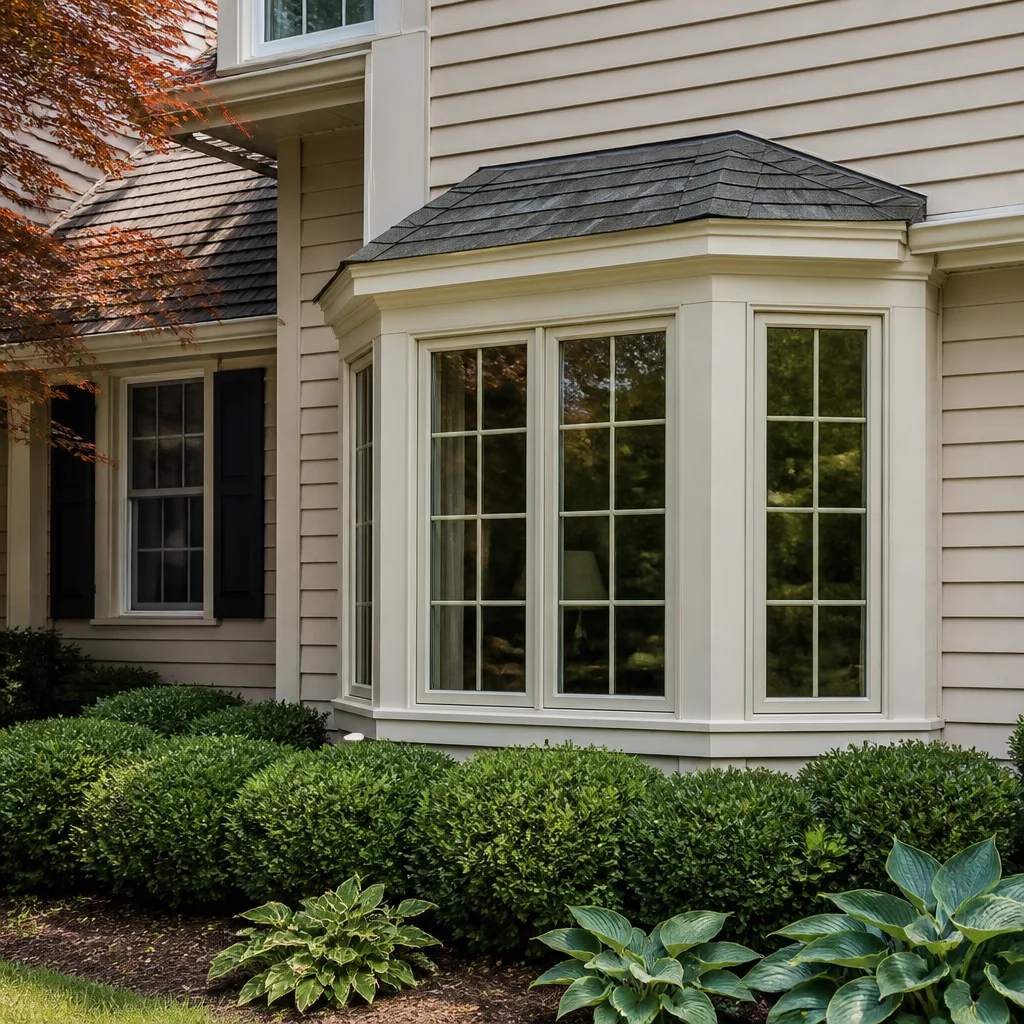 Bay & bow
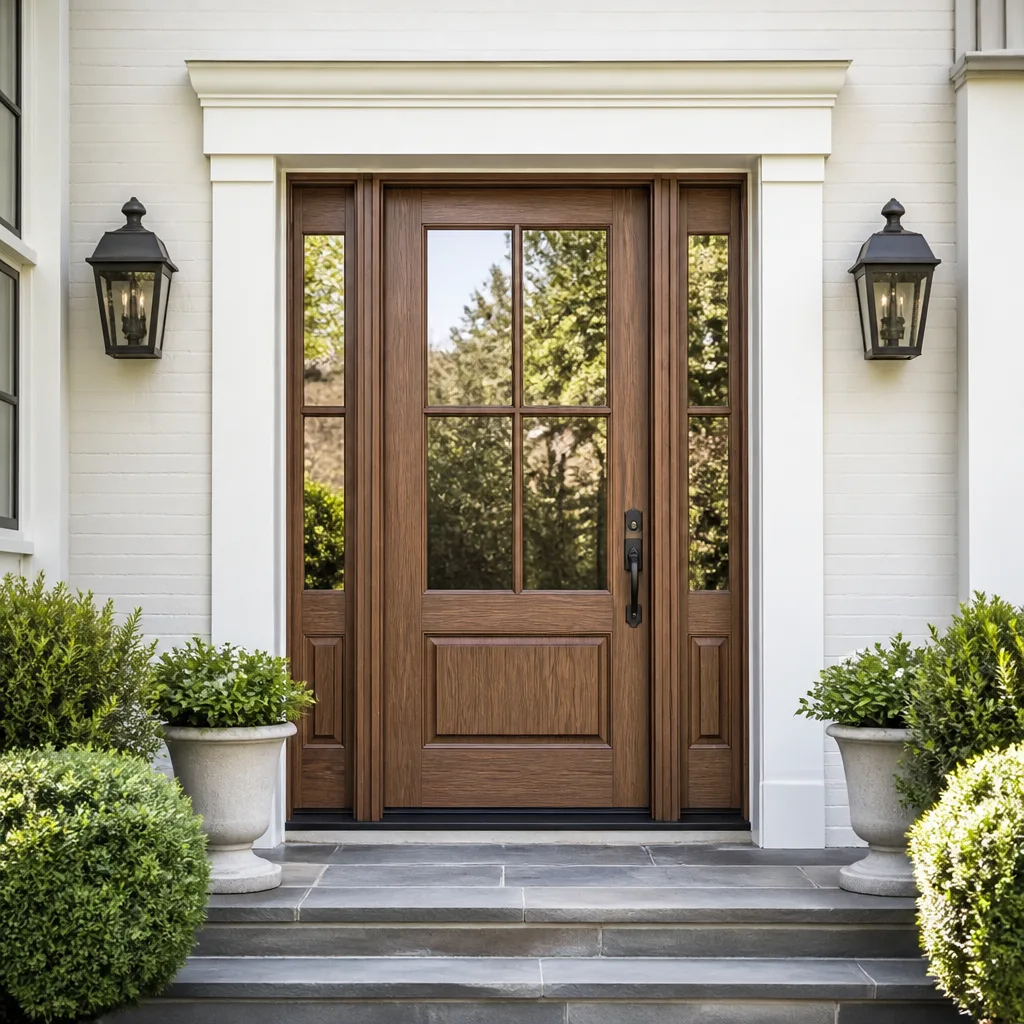 Entry doors
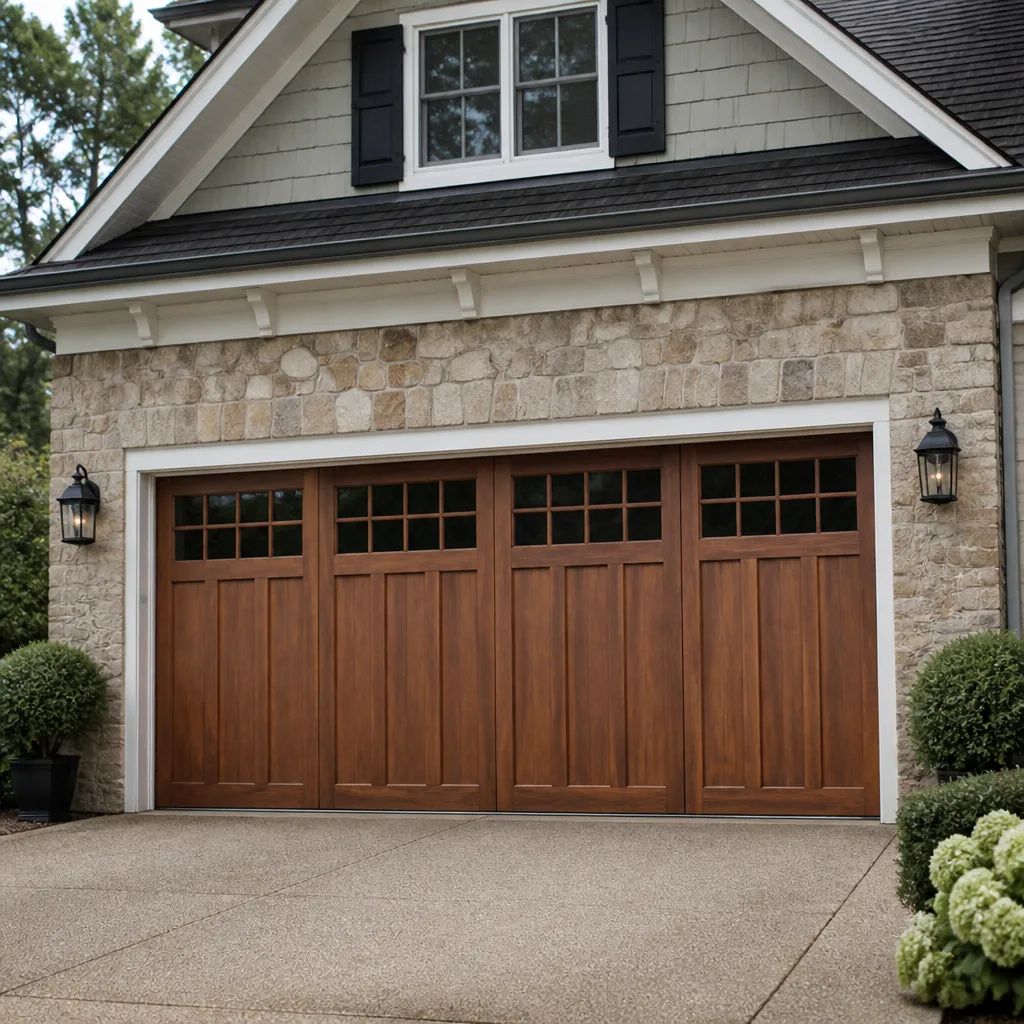 Impact garage doors
 PGT
PGT CGI
CGIFree in-home measure and quote - PGT, CGI and CWS impact lines compared on your actual openings, style by style
Get your free estimateWindows & Doors Permits, Codes & Inspections in CA: What You Need to Know
A window replacement that skips permitting in a Santa Clarita HFHSZ parcel isn’t just a code violation. It can be cited as a material misrepresentation on a homeowner’s insurance policy after a fire loss. That means a $600 window swap could, in the worst case, become a denied claim on a $900,000 home. This guide walks through exactly what triggers a permit in Santa Clarita, what Title 24 energy rules require in Climate Zone 9, how wildfire-zone designations change the equation, and what a city inspector actually checks on inspection day. For a deeper look at the full project scope, see The Complete Guide to Windows & Doors in Santa Clarita. You’ll finish knowing how to stay compliant without turning a two-day job into a two-week bureaucratic delay.
Quick Answer
Most window and door replacements in Santa Clarita require a building permit when the opening size changes, when structural headers are modified, or when the home sits in a High Fire Hazard Severity Zone (HFHSZ) where wildfire-resistant glazing rules apply under California Building Code Chapter 7A. Straight same-size, same-location replacements generally do not trigger a permit, though Title 24 energy compliance documentation is still required for any replacement window or door. If your home is in an HFHSZ, you should assume a permit is required until the city’s building division confirms otherwise.
Styles & brands we work with
Table of Contents
- What Actually Triggers a Permit in Santa Clarita
- Title 24 Energy Compliance for Window Replacement in Climate Zone 9
- Wildfire Zones (HFHSZ) and Chapter 7A: What Changes
- The City Inspection Checklist: What Your Crew Must Leave Visible
- Previous Owner Installed Windows Without Permits: Now What?
- What Permits and Inspections Cost in Santa Clarita
- How Long the Permit Process Takes
- Door-Specific Codes: Egress, Swing, and Thresholds
What Actually Triggers a Permit in Santa Clarita
The City of Santa Clarita requires a building permit for window and door work under three broad conditions. The first is any change to the rough opening dimensions. Widening a window, converting a sliding door to French doors, or adding a new window where none existed all require a permit because the framing changes move structural load paths. The second trigger is header modification. A header is the horizontal beam above a window or door that carries the weight of the wall above it. If your existing header is undersized for the new opening, or if you’re moving a header, the city wants a plan review before you cut into the wall. The third trigger is any opening added to a fire-rated wall, which is common in attached garages and zero-lot-line construction.
Same-size, same-location replacements that do not alter the rough opening, do not touch the header, and do not change the wall’s fire rating generally fall under what the city calls a “like-for-like” replacement. In practice, that means pulling out the old sash and frame within the existing opening and setting the new unit into the same hole. Santa Clarita’s building division treats these as exempt from permit under the California Residential Code’s allowance for ordinary repairs. But that exemption applies to the building permit, not to Title 24 energy documentation, which is still required at final inspection or when the home is sold.
Unincorporated LA County parcels near Santa Clarita, including parts of Canyon Country and Agua Dulce that fall outside city jurisdiction, follow Los Angeles County building codes instead. The county is generally stricter on sliding-glass-door swaps and on any replacement touching a hillside foundation. When we price window and door work for homes in these pockets, we check the specific parcel jurisdiction before writing the quote, because the permit path differs from a city lot three streets away. If you want to explore window-specific options that fit your opening without reframing, our Window Replacement in Santa Clarita page walks through the product side.
Title 24 Energy Compliance for Window Replacement in Climate Zone 9
California Building Code Title 24, Part 6 sets mandatory energy performance minimums for every replacement window and exterior door sold in the state. Most of Santa Clarita sits in Climate Zone 9, which has specific U-factor and Solar Heat Gain Coefficient (SHGC) thresholds that manufacturers must meet for compliance. The U-factor measures how well the glass resists heat transfer. The SHGC measures how much solar heat the glass lets through. For Climate Zone 9, replacement windows must meet a maximum U-factor of 0.30 and a maximum SHGC of 0.23, or better, depending on orientation and overhang.
What this means in plain terms: the windows you install in a Santa Clarita summer need to block most of the solar gain coming through south and west-facing glass. A single-pane aluminum window from the 1980s has a U-factor around 1.0 and an SHGC near 0.80, which is why those rooms bake in August. A modern dual-pane low-E window from a brand like PGT or CWS typically tests at U-factor 0.27 or lower and SHGC 0.20 or lower, which clears the code with margin.
The compliance path works like this. The installer or homeowner fills out a CF-1R form (Certificate of Compliance, Residential) documenting the U-factor and SHGC of each window by orientation and size. At completion, a CF-3R form (Certificate of Installation) verifies the product actually installed matches the specified product. Most window manufacturers publish Title 24-compliant default values for their product lines, which makes documentation straightforward. The city’s inspector may not ask for the CF-1R on a like-for-like replacement, but the forms are required to be on file if you sell the home within three years of the work.
One point that trips up homeowners: Title 24 compliance is not optional even when a building permit is not required. The state treats energy code as a standalone requirement. If you install a window that does not meet the U-factor and SHGC minimums for Zone 9 and then list the home for sale, the buyer’s home inspector can flag it and the deal can stall. We always include the CF-1R default package with any replacement quote so the paperwork exists whether the city asks for it or not.
Wildfire Zones (HFHSZ) and Chapter 7A: What Changes
Santa Clarita has large swaths of hillside that fall under the state’s High Fire Hazard Severity Zone maps adopted by the California Department of Forestry and Fire Protection (CAL FIRE). The city also enforces Very High Fire Hazard Severity Zone (VHFHSZ) rules on parcels bordering open space and canyon edges. When a home sits in an HFHSZ or VHFHSZ parcel, California Building Code Chapter 7A applies to windows and exterior doors. Chapter 7A mandates that glazing in these zones meet minimum wildfire-resistance performance standards, which in practice means tempered glass, dual-pane construction, and in some cases multi-pane assemblies with window screens that can survive brief flame exposure.
The wildland-urban interface rules under Public Resources Code 4291 also require defensible-space clearances around the structure, and the Santa Clarita fire marshal’s office ties those requirements into the building permit when the work touches an exterior wall. If you’re replacing windows on a hillside lot in Sand Canyon or Placerita Canyon, the permit application will likely route through the fire district for a Chapter 7A review before the building division approves it.
Here’s the insurance angle most guides miss. When a home in an HFHSZ has unpermitted window work, the insurer can characterize the omission as a material misrepresentation on the policy application or renewal. Most California homeowner policies ask directly whether the home has had any unpermitted modifications and whether wildfire-resistant materials are installed in required areas. A window swap that skipped the Chapter 7A review gives the insurer a reason to deny a fire claim later, even if the window had nothing to do with the fire’s path. We’ve talked to enough adjusters to know that “it didn’t cause the fire” is not a defense they accept. In our experience, the $600 to $1,200 it costs to pull and close the proper HFHSZ window permit is the least expensive insurance you’ll buy.
Brands like CGI manufacture windows specifically tested for the Chapter 7A wildfire market. Their products carry the necessary glazing certifications for HFHSZ homes in Santa Clarita, and we stock them for exactly this reason. When a hillside permit crosses the desk, the product spec matters as much as the paperwork.
The City Inspection Checklist: What Your Crew Must Leave Visible
Santa Clarita building inspectors follow a predictable checklist on window and door inspections. Knowing what they check means you can have the site ready and avoid a failed inspection, which costs time and a re-inspection fee. Here is what an inspector typically verifies, in order:
- Framing and header size. If the opening changed and the framing inspection is required, the inspector wants to see the header thickness, the king studs and trimmer studs, and the anchor nailing pattern before insulation or drywall covers anything.
- Flashing at the sill and jambs. The inspector checks for proper sill pan flashing that directs water outward, and head flashing over the top of the window. Missing or reversed flashing is the most common correction item on a Santa Clarita window inspection.
- Weep holes and drainage path. For stucco and hard-coat exteriors common in Valencia and Saugus, the inspector verifies that weep holes at the bottom of the window have an unobstructed path to the exterior face.
- Egress dimensions for bedrooms. In any bedroom, the inspector confirms the net clear opening meets the minimum 5.7 square feet, with a minimum 24-inch clear height and 20-inch clear width, and that the sill height is no more than 44 inches above the floor.
- Glazing certification marks. For HFHSZ parcels, the inspector looks for the tempered-glass bug or the Chapter 7A-compliant certification etching in the corner of the glass.
- Weatherstripping and seal condition. The inspector will run a visual check around the full perimeter for gaps that indicate the unit was not set square.
- Final site condition. The city does not formally inspect housekeeping, but an inspector who arrives to a floor covered in broken glass and old caulk beads is starting from a bad position. Our crews leave the site inspection-ready, and we deliver a photo of the clean-up before leaving, per the Cedarwell Care Promise.
A failed inspection in Santa Clarita costs a re-inspection fee of around $180 to $250, depending on which division reviews it, and adds at least a week to the schedule while the correction is made and the inspector returns. Prepping for the checklist avoids most failures before they happen.
Previous Owner Installed Windows Without Permits: Now What?
Buyers and sellers in Santa Clarita discover unpermitted window replacements constantly. Sometimes it surfaces during escrow when the title report or the home inspection flags windows that don’t match the permitted plans. Sometimes the city sends a notice after a neighbor’s remodel triggers a code review of the block. When it happens, there is a defined path to fix it.
The process starts with a request to the City of Santa Clarita building division for a retroactive permit, sometimes called an “as-built” permit. The homeowner submits the window specifications, manufacturer documentation, and often photos of the installed units. If the windows were installed correctly and meet current code, the city can issue the permit after inspection and close the record. If the windows do not meet code, they must be brought into compliance, which sometimes means replacement or a retrofit of the glazing or frame.
Not every contractor can sign off on prior work. Only a licensed contractor with the proper classification, typically a B license or a C-17 glazing license, can take responsibility for retroactive permitting on someone else’s installation. The contractor is certifying that the work meets code and that any deficiencies have been corrected. This is not a casual favor. If the contractor signs off on work that later fails, the contractor’s license and bond are on the line. In our experience, most reputable contractors will require a physical inspection of the windows and openings before putting their name on the as-built. The fee to bring prior work into compliance depends on what needs correcting, but the city’s as-built permit itself is typically under $400 in Santa Clarita.
Once the as-built permit closes, the home’s permit record is clean. That matters at resale, at refinance, and when the insurer asks about unpermitted work. If you’re in this position, our Window Installation in Santa Clarita page explains how we evaluate existing openings and what a compliance retrofit involves.
What Permits and Inspections Cost in Santa Clarita
Permit costs in Santa Clarita follow a valuation-based schedule set by the city. Small residential window and door permits typically run between $250 and $600 depending on the scope, the number of openings, and whether plan review is required. A simple like-for-like replacement with no permit falls outside the fee schedule entirely, but the Title 24 documentation still applies. Here are the typical line items:
- Building permit for window/door replacement (1 to 3 openings): $250 to $400
- Building permit with plan review (structural change or opening modification): $450 to $900
- Fire district review surcharge (HFHSZ parcels): $100 to $300
- Re-inspection fee (per occurrence): $180 to $250
- Title 24 CF-1R/CF-3R documentation: $75 to $150 (often included in the window quote)
These are current ranges we see on Santa Clarita City permits in 2026. LA County parcels have their own fee schedule that runs slightly higher, and some unincorporated canyon areas add a haul-route surcharge for construction traffic. Always ask your contractor to break out permit fees as a separate line item on the written quote so you know exactly what the city is charging versus what the installation itself costs.
One note on trust: all Lightwell quotes include a written price before any work starts, with permit fees itemized separately. The price the city charges is the price on the line item. We don’t pad it, and we don’t bury it in a lump sum. If the city issues a partial refund because the scope changed, that refund goes back to the homeowner. Call (661) 430-5327 if you want a permit itemization for your specific address.
How Long the Permit Process Takes
For a straightforward window replacement with no structural changes, the Santa Clarita online permit portal can turn around an over-the-counter permit in one to two business days. That is the fastest path, and it’s available for simple like-for-like swaps that still require a permit due to HFHSZ or fire district triggers. The city has improved its digital intake significantly since 2023, and most simple window permits no longer require an in-person trip to City Hall.
For work that requires plan review, the timeline stretches. A window enlargement with a new header, or a door conversion that changes egress, typically sits in plan review for two to four weeks in Santa Clarita. If the fire district is involved because the parcel is in an HFHSZ, add another week for their comment cycle. Expedited review is not generally available for residential window work, so the schedule is the schedule.
The realistic total timeline for a permitted window or door project in Santa Clarita, from signed contract to final inspection, should look like this:
- Contract signed and permit application submitted: Day 1
- Permit issued (simple permit): Days 2-4
- Materials ordered (frame, glass, hardware): Days 3-21 depending on product line and customization
- Installation: Days 22-25 for most multi-window projects
- Inspection scheduled and completed: Days 26-32
- Permit closed out: Day 35
Plan for about five weeks from start to close on a typical permitted window project in Santa Clarita. Products with longer lead times, like some specialty CWS or ViewLux lines, can push the order window to four or five weeks. We quote lead times honestly rather than promise a finish date the glass factory can’t keep.
Door-Specific Codes: Egress, Swing, and Thresholds
Exterior doors in California have their own code requirements that overlap with windows but add specific rules around egress, swing direction, and threshold height. The primary exit door of a dwelling must have a minimum clear width of 32 inches and a minimum clear height of 78 inches when open. The door must swing inward, with some exceptions for doors serving small rooms or basements. Interior swinging doors between a garage and a living space must be solid-core, fire-rated, and fitted with a self-closing hinge. Those aren’t preferences. They are California Residential Code provisions that Santa Clarita inspectors enforce.
Sliding patio doors are treated as egress doors under some circumstances, which means the moving panel must meet minimum clear opening dimensions and the door must be operable from the inside without keys or tools. A sliding door that is painted shut, has a broken roller track, or requires a special-order tool to operate will fail inspection and create a safety problem in an emergency. We routinely replace sliding doors in older Santa Clarita homes that have sagged off their rollers, and the permit path for those replacements depends on whether the rough opening stays the same.
Threshold height at exterior doors has a 1.5-inch maximum step-up from the interior floor to the top of the threshold in most residential applications. Doors serving balconies or decks have additional fall-protection and water-management rules. And any door in an HFHSZ parcel must meet the same Chapter 7A exterior-door testing for wildfire resistance that applies to windows. CGI and PGT both manufacture door systems tested to those standards, and those are the lines we recommend for canyon-side homes in Santa Clarita. If door work is on your list, the Door Installation in Santa Clarita page has more on the product side of the decision.
Common Mistakes to Avoid
- Skipping the permit because the contractor said it’s fine. A contractor who tells you not to pull a permit on an HFHSZ hillside parcel is giving you advice that can void your fire insurance. Get the permit, or get a different contractor.
- Assuming the city won’t find out. Santa Clarita’s online permit records are searchable, and most home sales include a permit history pull. Unpermitted window work surfaces during escrow with remarkable regularity.
- Installing windows that meet code for the wrong climate zone. Windows rated for Climate Zone 6 won’t meet the SHGC requirements for Zone 9. A window can be Energy Star certified and still fail Santa Clarita’s Title 24 threshold.
- Leaving the old window sticker on and calling it documentation. The NFRC sticker on the glass is a temporary label. Permanent compliance requires the manufacturer’s published default values and the CF-1R form filed with the project.
- Blocking the inspector’s access to the window interior. If a bookshelf or a bed is pushed against the window being inspected, the inspector can’t verify flashing or egress dimensions, and you’ll pay for a re-inspection. Clear the work area before the inspector arrives.
- Forgetting that Title 24 applies even when the building permit does not. The energy code is a standalone requirement. Like-for-like replacements still need the energy compliance paperwork.
See the difference
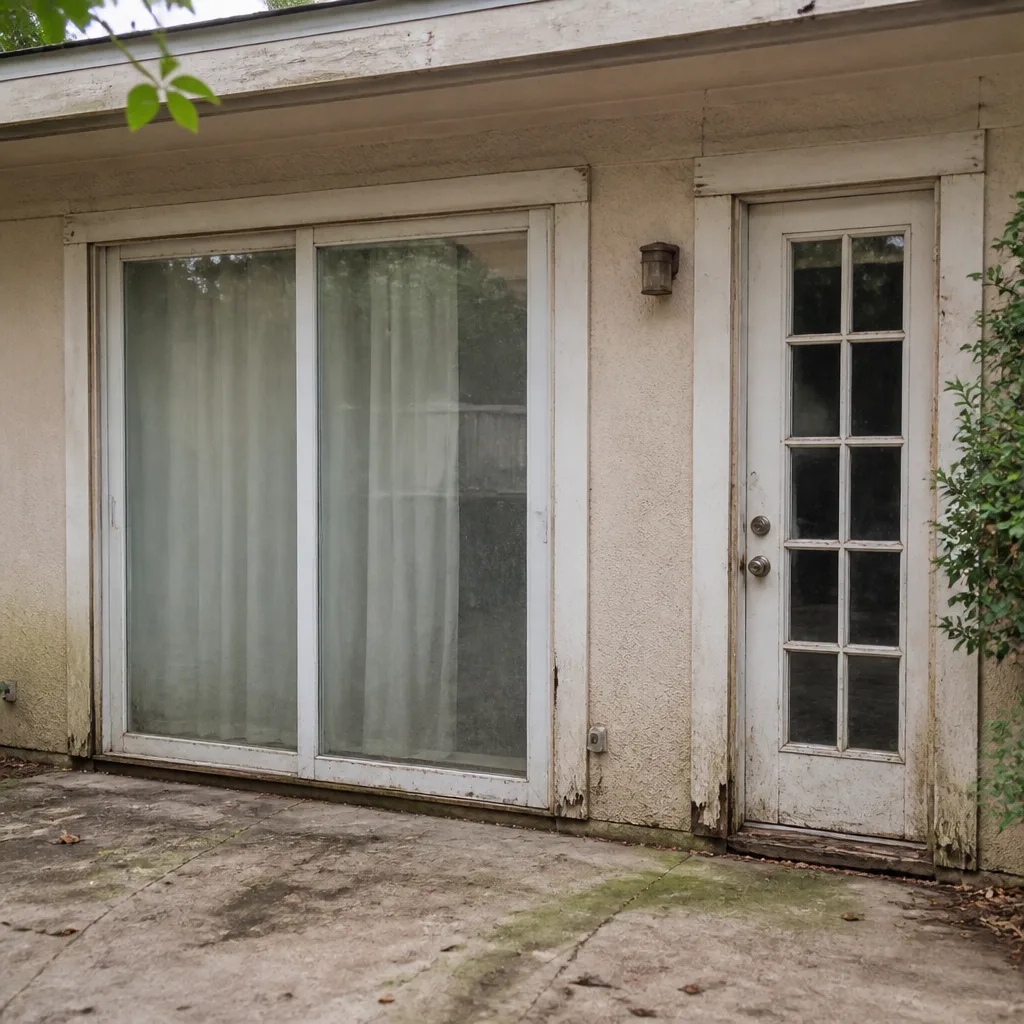 Before
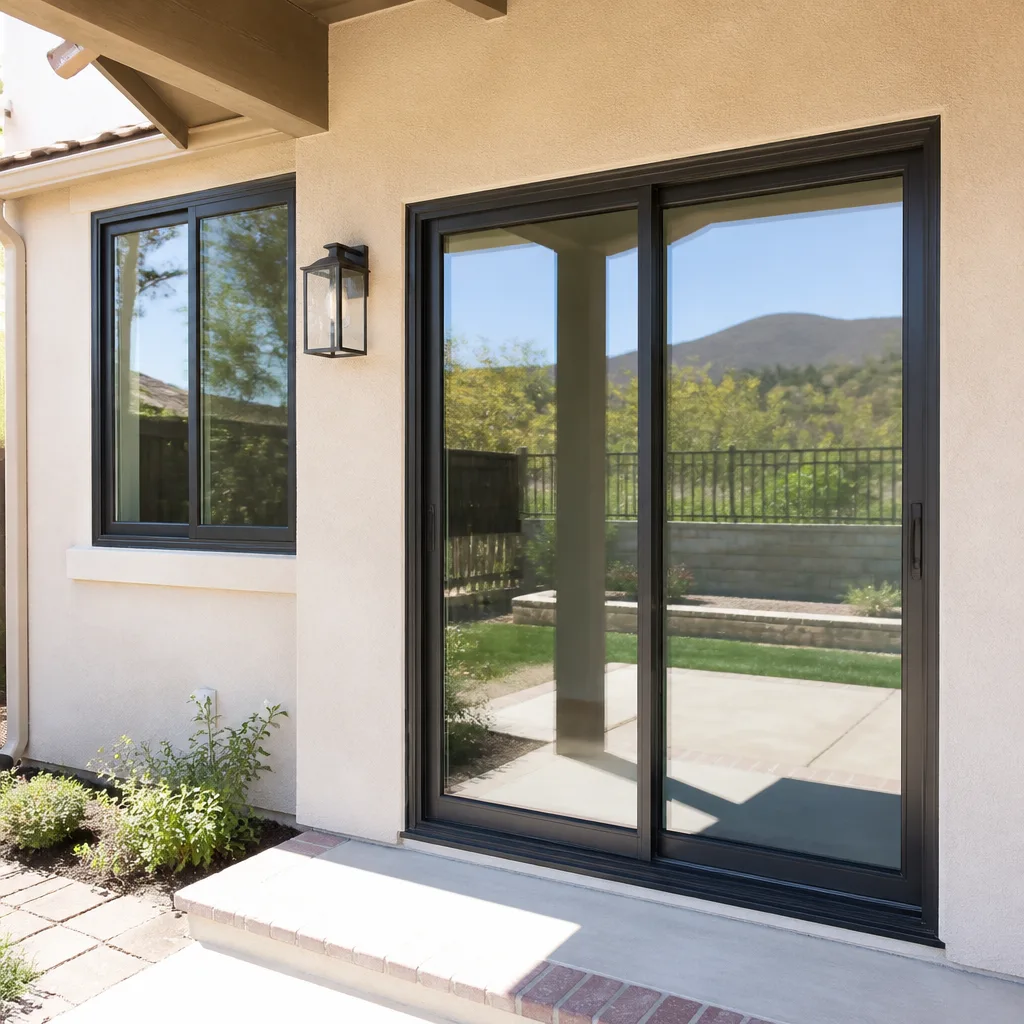 After
After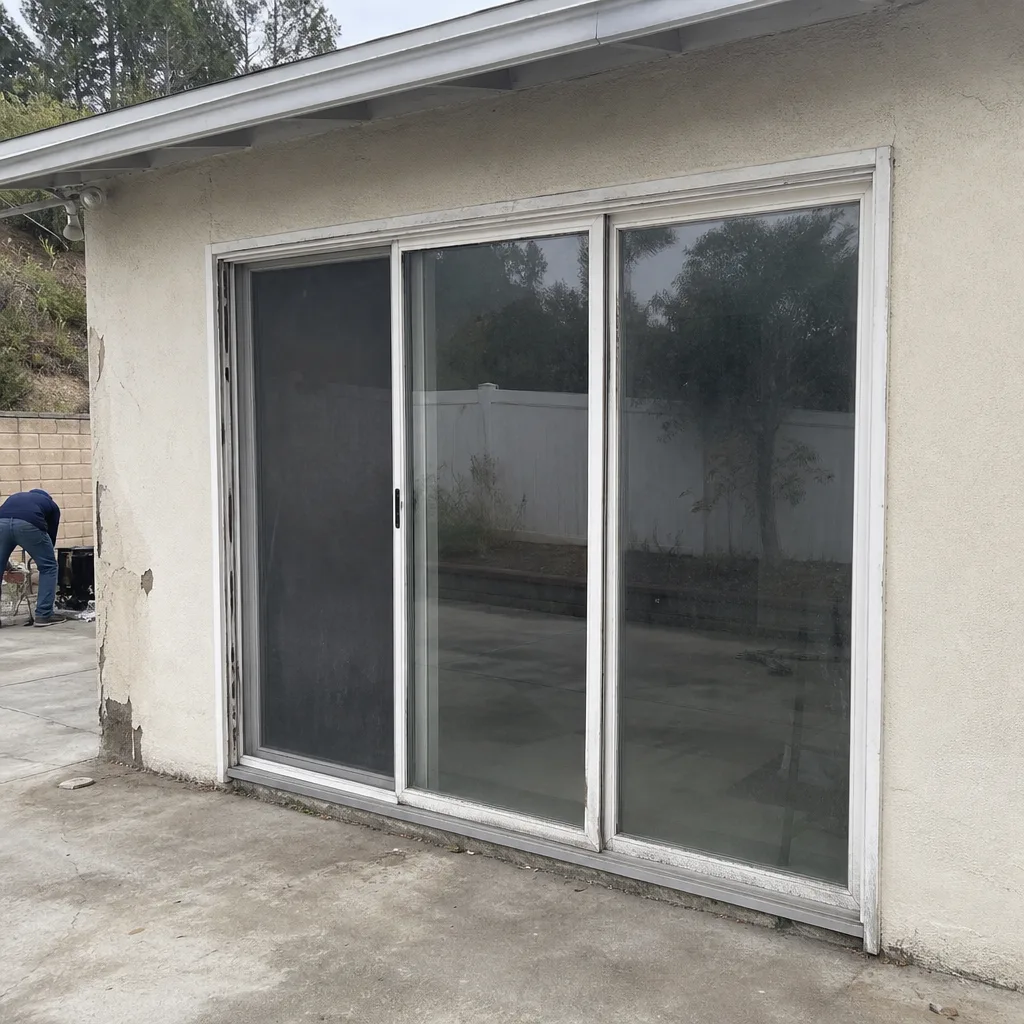 Before
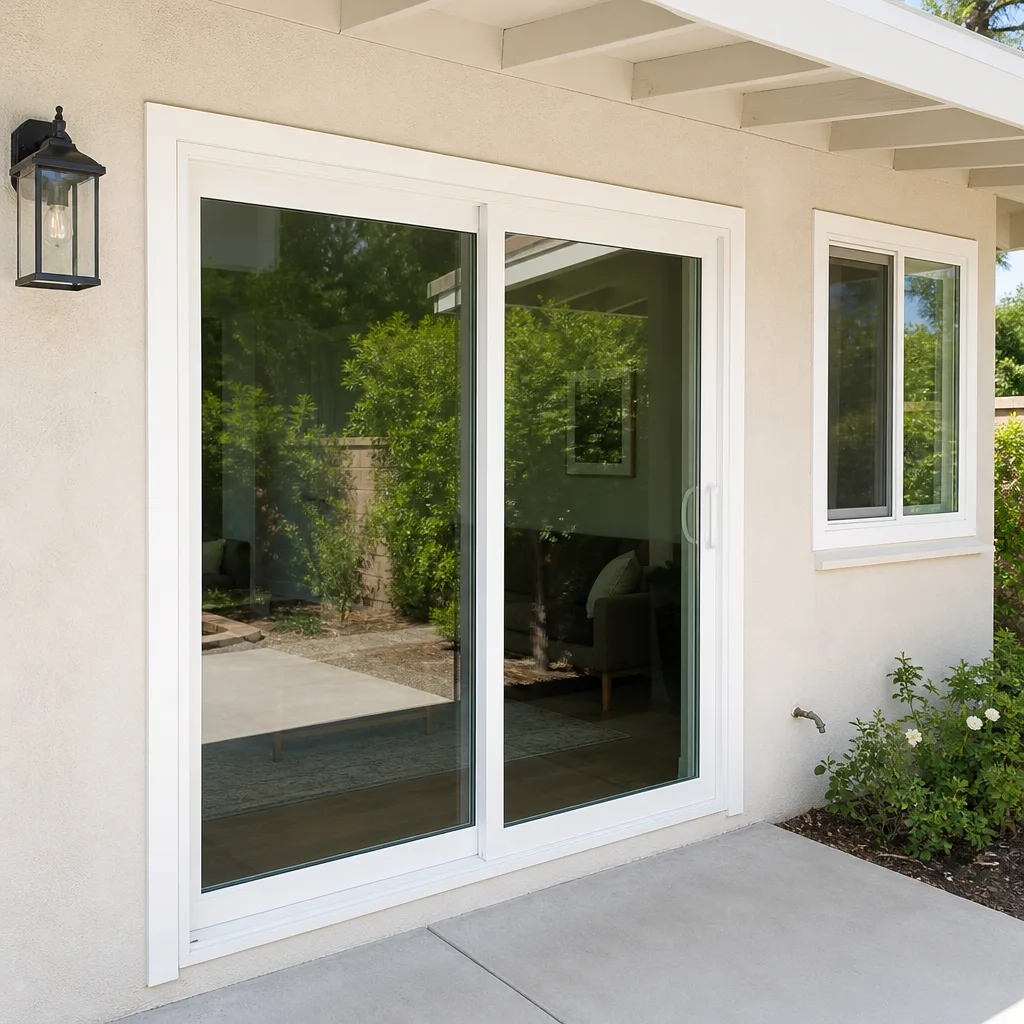 After
After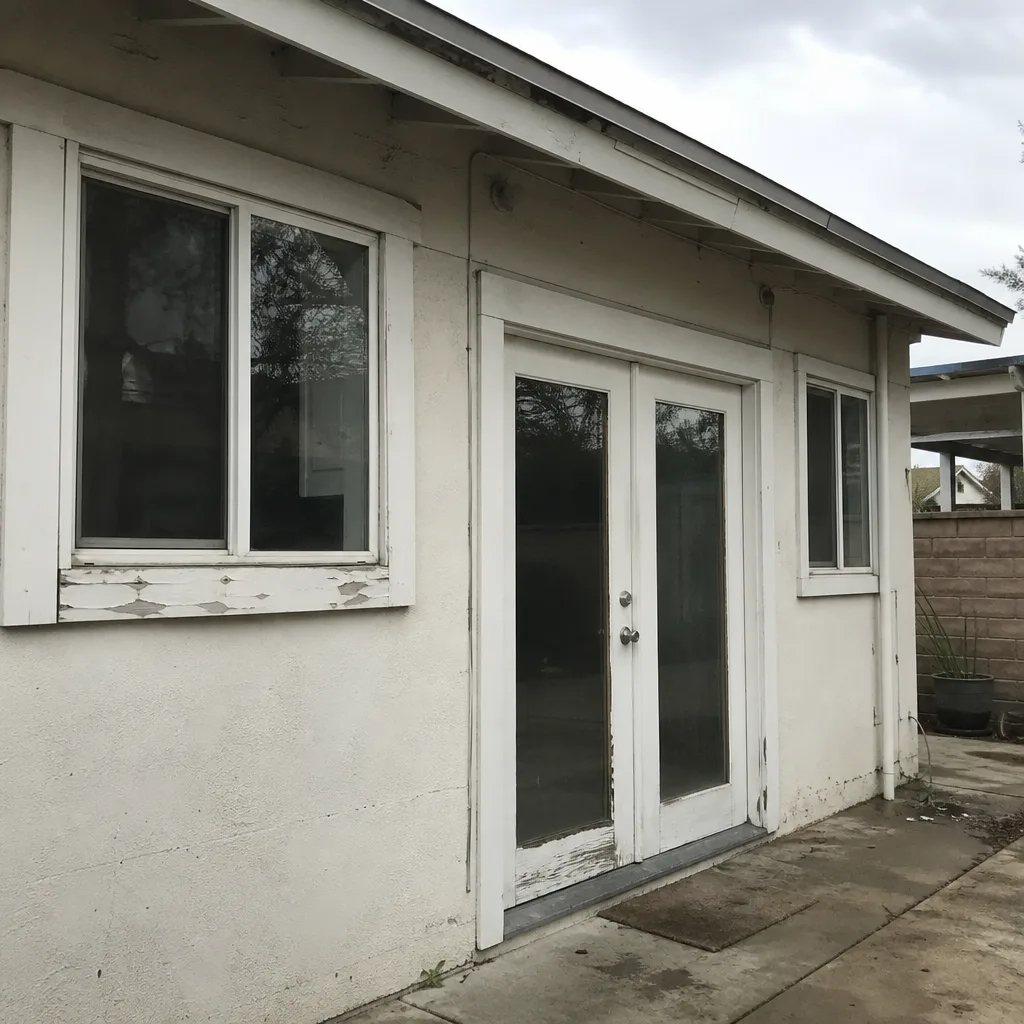 Before
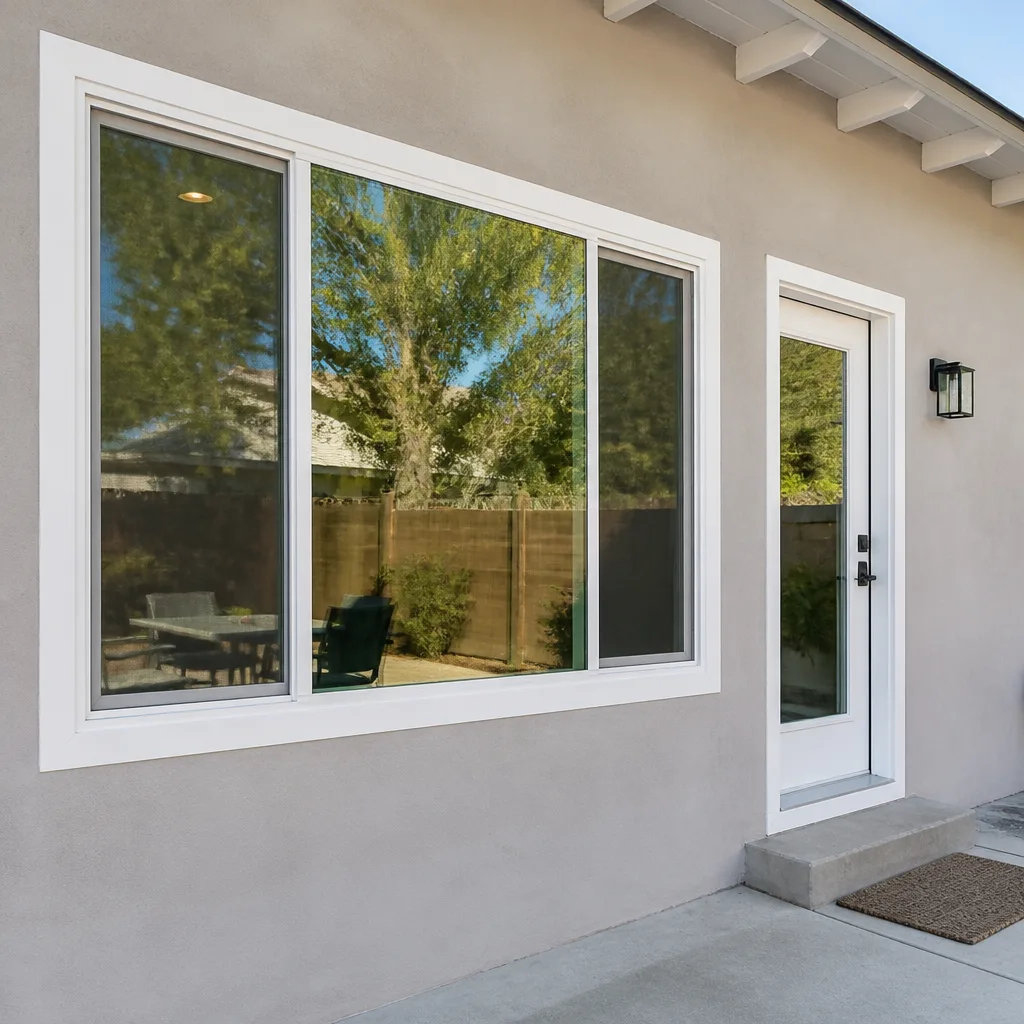 After
AfterWhen to Call a Professional
Permit navigation for windows and doors in Santa Clarita is not a DIY vs Professional Windows & Doors: The Santa Clarita Homeowner’s Decision Guide paperwork exercise when the parcel is in an HFHSZ, when the opening size changes, or when a previous owner left unpermitted work behind. Those situations require a contractor who knows the city’s plan review path, the fire district’s Chapter 7A requirements, and the Title 24 documentation package. A licensed contractor assumes responsibility for code compliance on the permit they pull. A homeowner who pulls an owner-builder permit assumes that responsibility personally, and the risk attaches to the property for as long as the work stands. If you’re unsure which category your project falls into, Lightwell Windows Santa Clarita offers free estimates in Santa Clarita. Call (661) 430-5327 and we’ll check your parcel’s permit trigger before you spend a dollar on glass.
Frequently Asked Questions
No building permit is required for a true like-for-like replacement that keeps the rough opening, header, and wall assembly unchanged. However, Title 24 energy compliance documentation is still required, and if the home sits in an HFHSZ or VHFHSZ parcel, a permit may be required for glazing certification review. When in doubt, call the city’s building division or ask a licensed contractor to check the parcel. You can also browse more guides & resources on our blog. For a quick answer on your specific address, call (661) 430-5327 and we’ll confirm the trigger.
Replacement windows in Climate Zone 9, which covers most of Santa Clarita, must meet a maximum U-factor of 0.30 and a maximum SHGC of 0.23. Most modern dual-pane low-E windows from manufacturers like PGT, CWS, or ViewLux test well below these limits, but the specific product model must be documented on the CF-1R form. We provide that documentation with every window quote at no extra charge.
The city will typically allow a retroactive permit, called an as-built permit, if the windows meet current code. A licensed contractor must inspect the work, certify compliance, and file the as-built application. If the windows fail code, corrective work is required before the permit can close. The as-built permit itself usually costs under $400, but corrective work costs depend on what was installed. Call (661) 430-5327 if you need an evaluation.
Yes. Any window or door added to a fire-rated wall, such as the wall between an attached garage and a living area, triggers a permit and must meet fire-rated assembly requirements. That usually means tempered glass in a listed fire-rated frame, installed to the manufacturer’s tested assembly details. A like-for-like replacement in an existing opening is simpler, but any new penetration in that wall requires plan review in Santa Clarita.
A simple window replacement permit for one to three openings runs $250 to $400. If structural work or plan review is involved, the permit climbs to $450 to $900. HFHSZ parcels add a fire district review surcharge of $100 to $300. Re-inspection fees are $180 to $250 per occurrence. Your contractor should itemize permit fees separately on the written quote.
You can, but you assume personal responsibility for code compliance, and the permit record will show an owner-builder classification. That can complicate a future sale and create liability if work fails later. Most homeowners in Santa Clarita let a licensed contractor pull the permit, because the contractor’s license and bond back the work. We recommend that path for anything beyond the simplest replacement.
The Bottom Line
Window and door permits in Santa Clarita hinge on three variables: whether the rough opening changes, whether the home sits in a wildfire hazard zone, and whether a fire-rated wall is involved. Like-for-like replacements are usually permit-exempt but still require Title 24 documentation. HFHSZ parcels are the ones where skipping the permit carries real financial risk, including potential fire insurance claim denial. Plan for a five-week total timeline when a permit is required, and budget $250 to $900 for city fees depending on scope. When the path is unclear, start with the Lightwell Windows Santa Clarita home page or call (661) 430-5327. We’ll check your parcel, explain the triggers, and put the full permit picture in writing before any work starts.
Written by Keith Yamada, Owner at Lightwell Windows Santa Clarita, serving Santa Clarita since 2010.
Six Reasons Homeowners Choose Lightwell Windows Santa Clarita
Laminated glass and reinforced frames hold up to wind-driven rain, hail and flying debris, so your openings stay sealed when the weather turns.
Low-E insulated impact glass from our manufacturer lines commonly cuts monthly cooling bills 20-30%.
Laminated impact glass shuts out up to 40% of outside noise - traffic, neighbors, weather.
Monitoring services run $30-90 a month. Laminated impact glass resists forced entry around the clock, with no subscription.
Tighter seals and insulated glass even out hot and cold rooms and stop the drafts at the frame.
A full impact package upgrades curb appeal, buyer confidence and appraised value in one project.